AngelAi's whitepapers explore the frontier of deterministic AI — where every decision is explainable, auditable, and compliant by design. It offers deep technical and strategic insight into how AI can deliver trusted, regulation-ready performance across sensitive domains such as finance.
Table of Contents

Can AI Crack The Mortgage Approval Gap? (September 29, 2026)

Operationalizing Fair and Accessible Lending with AI (September 2026)

The AI Execution Gap: Why CEOs Miss the Mark and How to Get It Right (July 6, 2026)

Designing a Deployable ML Development Framework that Operationalizes Trustworthy Predictive Applications in the Medical Field (June 1, 2026)

Side Hustle Surge Upends Traditional Underwriting (May 21, 2026)

Why Human Capital Is the Ultimate Moat in AI-First Finance (Apr 8, 2026)
Gamifying Customer Acquisition: What CEOs Can Learn From Game Design (Feb 19, 2026)
The Making of the AngelAi Engineers —
"Brillianeers" (Feb 2026)
The Mortgage Industry’s Interface Problem — And Why AI Alone Won’t Fix It (Jan 27, 2026)
Zero UI - The Future of User Experience
(Jan 21, 2026)
The Mortgage Industry's Ai Reality Check Why mortgage AI needs a transactional revolution (November 6, 2025)
Paradigm Shift: Transactional Language Model (TLM) — An Essential AI Architecture for Regulation-Sensitive Domains (Oct 2025)

How AngelAi is Driving Mortgage Decisions in the U.S. (Oct 23, 2025)
Not All AI Is Developed Equally
(May 30, 2025)
How AI Creates Fair Lending — Fast Company (May 22, 2024)
We Have Nothing To Fear From AI: Incorporating Deep Learning (Jan 31, 2024)
Addressing Biases In Your Corporate Fabric (Oct 16, 2023)
How AI Can Be A Force For Good In Achieving Fair Lending (Aug 09, 2023)

Evil A.I. : Cognitive Prophecy or Pop Fiction (May 05, 2023)

SVB Collapse: A Cautionary Tale of Concentration Risk and Lending to the Rich (April 18, 2023)
Web3 and the Financial Services Industry- An Exploration On How This Industry Will Transform (March 31, 2023)

NFTs 101: How Celligence is Using Blockchain Technology to Revolutionize the Real Estate Industry (Nov 8, 2022)

Are mortgage loan closing delay risks predictable? A predictive analysis using text mining on discussion threads (July 20, 2021)

Automated mortgage origination delay detection from textual conversations
(Oct 31, 2020)
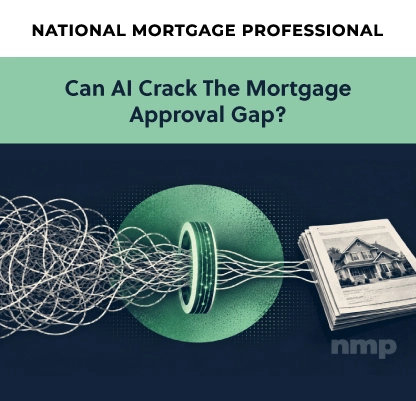
Can AI Crack The Mortgage Approval Gap? (September 29, 2026)
This National Mortgage Professional article explores AngelAi's whitepaper comparing Sun West Mortgage's 2025 results with Home Mortgage Disclosure Act (HMDA) data. It highlights how AngelAi contributed to significantly lower reported decline rates at Sun West compared to national benchmarks across multiple applicant groups. The findings point to new possibilities for expanding access to homeownership and unlocking an estimated $230 billion in potential additional lending volume nationwide.
Can AI Crack The Mortgage Approval Gap? (September 29, 2026)
This National Mortgage Professional article explores AngelAi's whitepaper comparing Sun West Mortgage's 2025 results with Home Mortgage Disclosure Act (HMDA) data. It highlights how AngelAi contributed to significantly lower reported decline rates at Sun West compared to national benchmarks across multiple applicant groups. The findings point to new possibilities for expanding access to homeownership and unlocking an estimated $230 billion in potential additional lending volume nationwide.
Operationalizing Fair and Accessible Lending with AI (September 2026)
This whitepaper explores how artificial intelligence can help address systemic challenges in mortgage lending by reducing process friction, improving borrower accessibility, and enabling more consistent, efficient, and transparent workflows. Drawing on AngelAi’s production lending environment and comparisons with 2025 Home Mortgage Disclosure Act (HMDA) benchmarks, this whitepaper examines how AI-powered automation can help minimize operational barriers caused by complex documentation, manual processes, and workflow inefficiencies while maintaining responsible lending practices, compliance controls, and auditability. The research presents a broader view of fair lending — one that considers not only the final credit decision but the entire borrower journey, from application and documentation to evaluation and approval.
Operationalizing Fair and Accessible Lending with AI (September 2026)
This whitepaper explores how artificial intelligence can help address systemic challenges in mortgage lending by reducing process friction, improving borrower accessibility, and enabling more consistent, efficient, and transparent workflows. Drawing on AngelAi’s production lending environment and comparisons with 2025 Home Mortgage Disclosure Act (HMDA) benchmarks, this whitepaper examines how AI-powered automation can help minimize operational barriers caused by complex documentation, manual processes, and workflow inefficiencies while maintaining responsible lending practices, compliance controls, and auditability. The research presents a broader view of fair lending — one that considers not only the final credit decision but the entire borrower journey, from application and documentation to evaluation and approval.
The AI Execution Gap: Why CEOs Miss the Mark and How to Get It Right (July 6, 2026)
Most organizations are investing in AI, yet only a small percentage are achieving measurable business outcomes. This article explores the growing AI execution gap, explaining why isolated AI experiments often fail to deliver revenue growth or cost savings. It highlights the importance of embedding deterministic AI into core business operations, measuring value-driven outcomes, and leading AI transformation from the executive level. Learn the practical strategies CEOs can use to turn AI from an experimental tool into a foundation for scalable growth, operational efficiency, and long-term competitive advantage.
The AI Execution Gap: Why CEOs Miss the Mark and How to Get It Right (July 6, 2026)
Most organizations are investing in AI, yet only a small percentage are achieving measurable business outcomes. This article explores the growing AI execution gap, explaining why isolated AI experiments often fail to deliver revenue growth or cost savings. It highlights the importance of embedding deterministic AI into core business operations, measuring value-driven outcomes, and leading AI transformation from the executive level. Learn the practical strategies CEOs can use to turn AI from an experimental tool into a foundation for scalable growth, operational efficiency, and long-term competitive advantage.
Designing a Deployable ML Development Framework that Operationalizes Trustworthy Predictive Applications in the Medical Field (June 1, 2026)
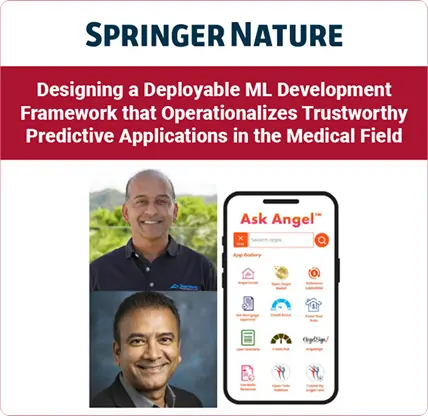
Predictive models for medical applications have shown promise, yet their clinical adoption remains limited due to concerns about prediction uncertainty, lack of interpretability, and limited reproducibility. This paper presents a deployable machine learning development framework that operationalizes trustworthy Ai for clinical prediction. The approach was validated through a real-world patient no-show prediction application using five years of electronic health record (7.9 million appointments) from a large U.S. pediatric hospital, demonstrating its potential as a scalable blueprint for building reliable, interpretable, and clinically useful predictive models.
Watch the podcast for a simplified explanation of this whitepaper.
Designing a Deployable ML Development Framework that Operationalizes Trustworthy Predictive Applications in the Medical Field (June 1, 2026)
Predictive models for medical applications have shown promise, yet their clinical adoption remains limited due to concerns about prediction uncertainty, lack of interpretability, and limited reproducibility. This paper presents a deployable machine learning development framework that operationalizes trustworthy Ai for clinical prediction. The approach was validated through a real-world patient no-show prediction application using five years of electronic health record (7.9 million appointments) from a large U.S. pediatric hospital, demonstrating its potential as a scalable blueprint for building reliable, interpretable, and clinically useful predictive models.
Watch the podcast for a simplified explanation of this whitepaper.

Side Hustle Surge Upends Traditional Underwriting (May 21, 2026)
Explore how the rise of side hustles and gig work is disrupting traditional mortgage underwriting. Pavan Agarwal explains how AngelAi’s Angel Income app delivers fast, accurate, and warranted income calculations for complex borrower profiles, helping brokers close deals efficiently. This innovative solution ensures modern borrowers are evaluated fairly, reducing delays and eliminating surprises in the loan process.
Side Hustle Surge Upends Traditional Underwriting (May 21, 2026)
Explore how the rise of side hustles and gig work is disrupting traditional mortgage underwriting. Pavan Agarwal explains how AngelAi’s Angel Income app delivers fast, accurate, and warranted income calculations for complex borrower profiles, helping brokers close deals efficiently. This innovative solution ensures modern borrowers are evaluated fairly, reducing delays and eliminating surprises in the loan process.
Why Human Capital Is the Ultimate Moat in AI-First Finance (Apr 8, 2026)
While the industry chases "GPU-first" strategies, Pavan Agarwal (Founder & CEO of AngelAi) advises that in regulated AI, your model is only as good as the person who built it. Published in Fast Company's Impact Council, this piece introduces AngelAi's "brillianeer" model—inspired by Toyota's just-in-time manufacturing philosophy—which treats engineering talent as a strategic, investor-level asset rather than an operating expense. It delves into how AngelAi has built a scalable, sustainable, and defensible execution engine based on its human capital.
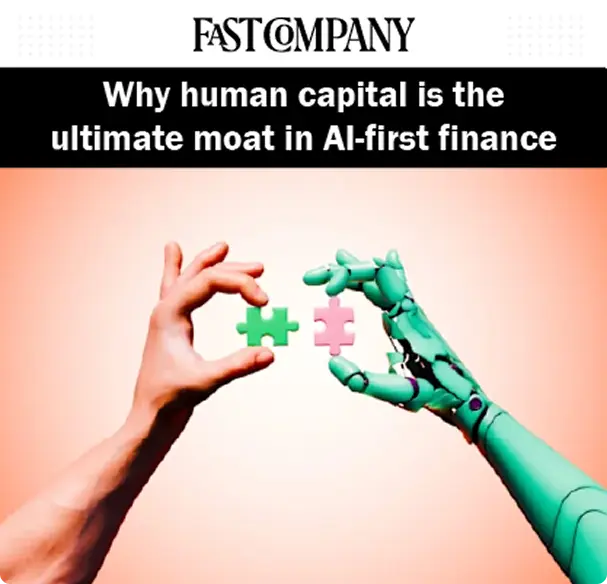
Why Human Capital Is the Ultimate Moat in AI-First Finance (Apr 8, 2026)
While the industry chases "GPU-first" strategies, Pavan Agarwal (Founder & CEO of AngelAi) advises that in regulated AI, your model is only as good as the person who built it. Published in Fast Company's Impact Council, this piece introduces AngelAi's "brillianeer" model—inspired by Toyota's just-in-time manufacturing philosophy—which treats engineering talent as a strategic, investor-level asset rather than an operating expense. It delves into how AngelAi has built a scalable, sustainable, and defensible execution engine based on its human capital.

Gamifying Customer Acquisition: What CEOs Can Learn From Game Design (Feb 19, 2026)
What if your customer acquisition strategy felt less like a funnel and more like a game people actually want to play? In this thought-provoking piece, Pavan Agarwal (Creator of AngelAi) explores how principles from video game design—hooks, tutorials, quests and endgames—can transform the way CEOs approach growth. By reframing prospects as "players" and acquisition as a journey filled with progress, rewards and mastery, leaders can lower friction, boost engagement and turn customers into loyal advocates.
Gamifying Customer Acquisition: What CEOs Can Learn From Game Design (Feb 19, 2026)
What if your customer acquisition strategy felt less like a funnel and more like a game people actually want to play? In this thought-provoking piece, Pavan Agarwal (Creator of AngelAi) explores how principles from video game design—hooks, tutorials, quests and endgames—can transform the way CEOs approach growth. By reframing prospects as "players" and acquisition as a journey filled with progress, rewards and mastery, leaders can lower friction, boost engagement and turn customers into loyal advocates.
The Making of the AngelAi Engineers — "Brillianeers" (Feb 2026)
This white paper explores how engineering talent becomes a strategic asset in regulated, transactional AI for financial services. In markets where reliability, compliance, and execution precision determine survival, engineering is not an operating function — it is a control discipline and an investor-level differentiator. It outlines AngelAi's research-backed human capital strategy for recruiting, developing, and retaining high-leverage systems thinkers who deliver production-grade AI under regulatory constraint. It presents the Brillianeer model: engineers who combine systems design, operational ownership, disciplined execution, and intrinsic motivation to build resilient, audit-ready, scalable AI infrastructure in high-stakes financial environments.
The Making of the AngelAi Engineers "Brillianeers" (Feb 2026)
This white paper explores how engineering talent becomes a strategic asset in regulated, transactional AI for financial services. In markets where reliability, compliance, and execution precision determine survival, engineering is not an operating function — it is a control discipline and an investor-level differentiator. It outlines AngelAi's research-backed human capital strategy for recruiting, developing, and retaining high-leverage systems thinkers who deliver production-grade AI under regulatory constraint. It presents the Brillianeer model: engineers who combine systems design, operational ownership, disciplined execution, and intrinsic motivation to build resilient, audit-ready, scalable AI infrastructure in high-stakes financial environments.
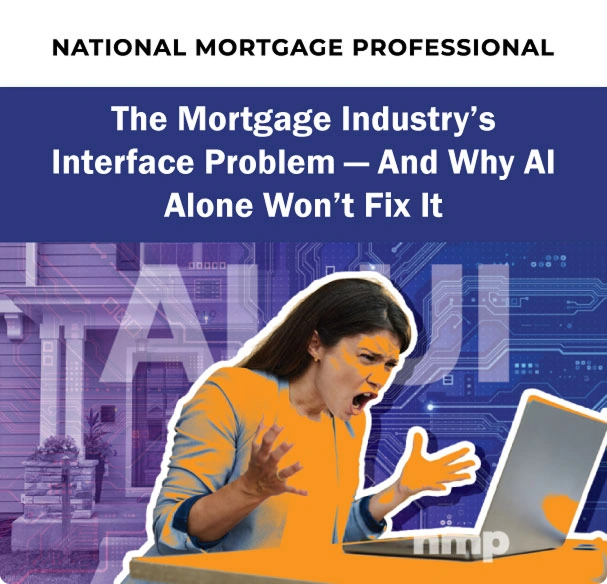
The Mortgage Industry’s Interface Problem — And Why AI Alone Won’t Fix It (Jan 27, 2026)
What if mortgage technology could adapt to human intent instead of forcing professionals to navigate outdated interfaces? In this insightful article, Pavan Agarwal (Creator of AngelAi) delves into the fundamental issue with current mortgage systems: the reliance on complex, error-prone UIs. He explains why current systems and AI-powered solutions fall short in addressing real-world needs. By introducing AngelAi’s transactional AI model—designed to understand intent, ensure accuracy, and enforce compliance—this piece outlines how the future of mortgage technology will streamline workflows, reduce errors, and enable professionals to focus on value-driven decisions, relationships, and growth.
The Mortgage Industry’s Interface Problem — And Why AI Alone Won’t Fix It (Jan 27, 2026)
What if mortgage technology could adapt to human intent instead of forcing professionals to navigate outdated interfaces? In this insightful article, Pavan Agarwal (Creator of AngelAi) delves into the fundamental issue with current mortgage systems: the reliance on complex, error-prone UIs. He explains why current systems and AI-powered solutions fall short in addressing real-world needs. By introducing AngelAi’s transactional AI model—designed to understand intent, ensure accuracy, and enforce compliance—this piece outlines how the future of mortgage technology will streamline workflows, reduce errors, and enable professionals to focus on value-driven decisions, relationships, and growth.
Zero UI - The Future of User Experience (Jan 21, 2026)
As conversational AI becomes the default way people expect to get things done, regulated industries still face a hard constraint: transactions must be correct, compliant, and auditable—not merely plausible. This whitepaper introduces AngelAi's post-UI approach, powered by a proprietary Transactional Language Model (TLM) that converts natural-language requests into deterministic, schema-bound actions, and a confidence-gated accuracy framework that escalates uncertainty to Human-in-the-Loop review. The result is a new standard for enterprise interaction: natural, adaptive across channels, and engineered for 100% transactional accuracy in high-stakes workflows.
Zero UI - The Future of User Experience (Jan 21, 2026)
As conversational AI becomes the default way people expect to get things done, regulated industries still face a hard constraint: transactions must be correct, compliant, and auditable—not merely plausible. This whitepaper introduces AngelAi's post-UI approach, powered by a proprietary Transactional Language Model (TLM) that converts natural-language requests into deterministic, schema-bound actions, and a confidence-gated accuracy framework that escalates uncertainty to Human-in-the-Loop review. The result is a new standard for enterprise interaction: natural, adaptive across channels, and engineered for 100% transactional accuracy in high-stakes workflows.

The Mortgage Industry's Ai Reality Check Why mortgage AI needs a transactional revolution (November 6, 2025)
As mortgage lenders race to adopt AI, the real challenge is no longer conversation — it’s execution. In this insightful article, Pavan Agarwal (Creator of AngelAi) explains why generic AI tools and chatbot-style solutions fall short in mortgage lending, where every action must be accurate, auditable, and compliant. He introduces AngelAi’s Transactional Language Model (TLM), a deterministic AI framework designed not just to answer questions, but to complete mortgage transactions reliably within regulatory guardrails. The article highlights why the future of mortgage AI lies in systems that can act with precision, reduce friction, and build trust through accountability.
The Mortgage Industry's Ai Reality Check Why mortgage AI needs a transactional revolution (November 6, 2025)
As mortgage lenders race to adopt AI, the real challenge is no longer conversation — it’s execution. In this insightful article, Pavan Agarwal (Creator of AngelAi) explains why generic AI tools and chatbot-style solutions fall short in mortgage lending, where every action must be accurate, auditable, and compliant. He introduces AngelAi’s Transactional Language Model (TLM), a deterministic AI framework designed not just to answer questions, but to complete mortgage transactions reliably within regulatory guardrails. The article highlights why the future of mortgage AI lies in systems that can act with precision, reduce friction, and build trust through accountability.
Paradigm Shift: Transactional Language Model (TLM) — An Essential AI Architecture for Regulation-Sensitive Domains (Oct 2025)
Discover how AngelAi introduces a new paradigm in mortgage and financial technology: the Transactional Language Model (TLM). Unlike probabilistic LLMs, the TLM delivers deterministic, auditable, and compliance-grade performance, transforming AI from chat-based assistance into a core transactional engine.
Paradigm Shift:Transactional Language Model (TLM) — An Essential AI Architecture for Regulation-Sensitive Domains (Oct 2025)
Discover how AngelAi introduces a new paradigm in mortgage and financial technology: the Transactional Language Model (TLM). Unlike probabilistic LLMs, the TLM delivers deterministic, auditable, and compliance-grade performance, transforming AI from chat-based assistance into a core transactional engine.

How AngelAi is Driving Mortgage Decisions in the U.S. (Oct 23, 2025)
AngelAi is transforming how consumers navigate one of life’s most important financial decisions—homeownership. This article explores how the AI-powered platform delivers personalized, unbiased mortgage guidance through a conversational interface, helping users move from pre-qualification to closing with speed and clarity. By combining real-time data analysis with “empathetic AI,” AngelAi simplifies complex loan decisions, reduces bias, and improves accessibility—especially for first-time and underserved buyers.
How AngelAi is Driving Mortgage Decisions in the U.S. (Oct 23, 2025)
AngelAi is transforming how consumers navigate one of life’s most important financial decisions—homeownership. This article explores how the AI-powered platform delivers personalized, unbiased mortgage guidance through a conversational interface, helping users move from pre-qualification to closing with speed and clarity. By combining real-time data analysis with “empathetic AI,” AngelAi simplifies complex loan decisions, reduces bias, and improves accessibility—especially for first-time and underserved buyers.
Not All AI Is Developed Equally
(May 30, 2025)
As the mortgage industry races to adopt AI, it’s crucial to differentiate between consumer-focused AI and the specialized systems required for high-stakes applications. In this article, Pavan Agarwal (Creator of AngelAi) explains why basic large language models (LLMs) like ChatGPT or Gemini fall short in assessing risks or navigating the complexities of mortgage applications. Unlike these models, AngelAi uses advanced neural networks tailored for fraud detection, credit risk assessment, and automated underwriting. This article emphasizes the need for AI systems that are error-free, transparent, and capable of making precise, compliant decisions to ensure safe and efficient mortgage processing.
Not All AI Is Developed Equally
(May 30, 2025)
As the mortgage industry races to adopt AI, it’s crucial to differentiate between consumer-focused AI and the specialized systems required for high-stakes applications. In this article, Pavan Agarwal (Creator of AngelAi) explains why basic large language models (LLMs) like ChatGPT or Gemini fall short in assessing risks or navigating the complexities of mortgage applications. Unlike these models, AngelAi uses advanced neural networks tailored for fraud detection, credit risk assessment, and automated underwriting. This article emphasizes the need for AI systems that are error-free, transparent, and capable of making precise, compliant decisions to ensure safe and efficient mortgage processing.
How AI Creates Fair Lending — Fast Company (May 22, 2024)
This article explores how artificial intelligence can tackle systemic biases in mortgage and lending processes, helping to expand access to credit for traditionally underserved borrowers. It highlights how legacy lending practices often disadvantage complex applications — especially among minority groups — and explains how AI-driven, augmented intelligence workflows can reduce bias, streamline decisioning, and make equitable lending outcomes more achievable. The piece draws on insights into how inclusive technology can empower borrowers and improve financial opportunity.
How AI Creates Fair Lending — Fast Company (May 22, 2024)
This article explores how artificial intelligence can tackle systemic biases in mortgage and lending processes, helping to expand access to credit for traditionally underserved borrowers. It highlights how legacy lending practices often disadvantage complex applications — especially among minority groups — and explains how AI-driven, augmented intelligence workflows can reduce bias, streamline decisioning, and make equitable lending outcomes more achievable. The piece draws on insights into how inclusive technology can empower borrowers and improve financial opportunity.
We Have Nothing To Fear From AI: Incorporating Deep Learning (Jan 31, 2024)
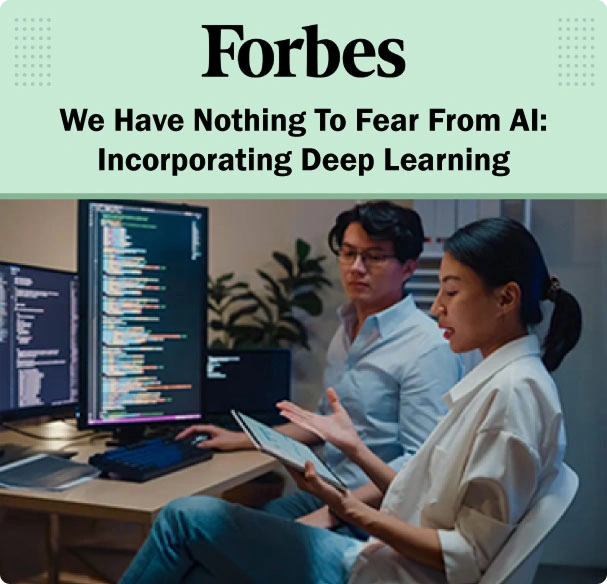
Artificial intelligence doesn't have to be intimidating—and deep learning isn't as mysterious as it sounds. In this forward-looking article, Pavan Agarwal (Creator of AngelAi) demystifies deep learning and explains why leaders should view it not as a threat, but as a powerful tool for reinvention. From automation and personalization to data-driven insights and competitive advantage, this piece outlines how executives can confidently incorporate AI into their organizations while empowering their existing teams to lead the transformation.
We Have Nothing To Fear From AI: Incorporating Deep Learning (Jan 31, 2024)
Artificial intelligence doesn't have to be intimidating—and deep learning isn't as mysterious as it sounds. In this forward-looking article, Pavan Agarwal (Creator of AngelAi) demystifies deep learning and explains why leaders should view it not as a threat, but as a powerful tool for reinvention. From automation and personalization to data-driven insights and competitive advantage, this piece outlines how executives can confidently incorporate AI into their organizations while empowering their existing teams to lead the transformation.

Addressing Biases In Your Corporate Fabric (Oct 16, 2023)
Diversity is more than a moral imperative—it's a strategic advantage. Drawing from personal experience and real-world leadership practices, this article examines how organizations can unlock untapped potential by fostering gender equality and inclusive cultures. Through mentorship, merit-based advancement and intentional leadership, companies can create environments where diverse perspectives thrive—driving innovation, empathy and long-term business success.
Addressing Biases In Your Corporate Fabric (Oct 16, 2023)
Diversity is more than a moral imperative—it's a strategic advantage. Drawing from personal experience and real-world leadership practices, this article examines how organizations can unlock untapped potential by fostering gender equality and inclusive cultures. Through mentorship, merit-based advancement and intentional leadership, companies can create environments where diverse perspectives thrive—driving innovation, empathy and long-term business success.
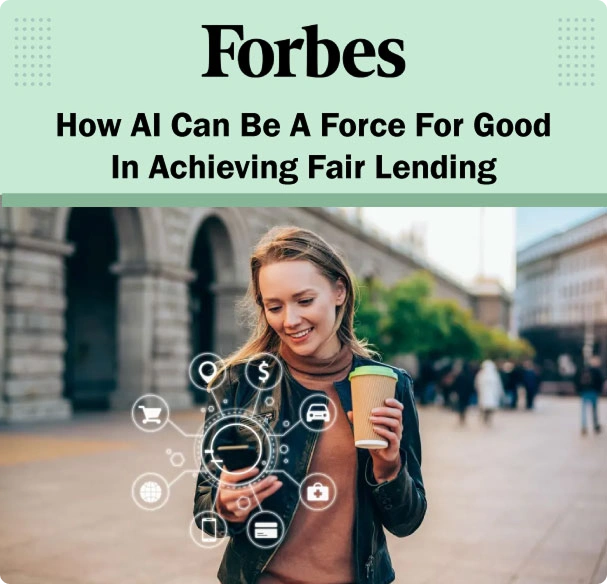
How AI Can Be A Force For Good In Achieving Fair Lending (Aug 09, 2023)
Can artificial intelligence help close the gap in financial inequality? This article explores how thoughtfully designed AI systems can reduce bias, streamline lending processes and expand access to homeownership—especially for underserved communities. By combining deterministic AI models with human oversight, financial institutions can improve speed, accuracy and fairness while building greater trust with customers and using technology as a true force for good.
How AI Can Be A Force For Good In Achieving Fair Lending (Aug 09, 2023)
Can artificial intelligence help close the gap in financial inequality? This article explores how thoughtfully designed AI systems can reduce bias, streamline lending processes and expand access to homeownership—especially for underserved communities. By combining deterministic AI models with human oversight, financial institutions can improve speed, accuracy and fairness while building greater trust with customers and using technology as a true force for good.

Evil A.I. : Cognitive Prophecy or Pop Fiction (May 05, 2023)
This commentary challenges sensational narratives about artificial intelligence becoming intrinsically "evil." Rather than treating AI as a looming existential threat, it argues that any harmful behavior would stem from human-defined objectives or misaligned incentives, not inherent malevolence. The piece navigates common fears surrounding autonomous intelligence and encourages a more nuanced, grounded view of AI's risks and realities, contrasting pop culture tropes with real technical considerations.
Evil A.I. : Cognitive Prophecy or Pop Fiction (May 05, 2023)
This commentary challenges sensational narratives about artificial intelligence becoming intrinsically "evil." Rather than treating AI as a looming existential threat, it argues that any harmful behavior would stem from human-defined objectives or misaligned incentives, not inherent malevolence. The piece navigates common fears surrounding autonomous intelligence and encourages a more nuanced, grounded view of AI's risks and realities, contrasting pop culture tropes with real technical considerations.
SVB Collapse: A Cautionary Tale of Concentration Risk and Lending to the Rich (April 18, 2023)
This article examines the collapse of Silicon Valley Bank as a critical lesson in concentration risk and structural imbalances in modern banking. It highlights how over-reliance on a narrow, affluent customer base and long-term investments created liquidity vulnerabilities, ultimately triggering a rapid bank run. The piece further explores how traditional lending biases toward wealthy clients distort market dynamics, and suggests that technology-driven approaches, including AI, could enable more balanced, scalable, and inclusive lending practices.

SVB Collapse: A Cautionary Tale of Concentration Risk and Lending to the Rich (April 18, 2023)
This article examines the collapse of Silicon Valley Bank as a critical lesson in concentration risk and structural imbalances in modern banking. It highlights how over-reliance on a narrow, affluent customer base and long-term investments created liquidity vulnerabilities, ultimately triggering a rapid bank run. The piece further explores how traditional lending biases toward wealthy clients distort market dynamics, and suggests that technology-driven approaches, including AI, could enable more balanced, scalable, and inclusive lending practices.
Web3 and the Financial Services Industry- An Exploration On How This Industry Will Transform (March 31, 2023)
This article presents Web3 as a transformative force for the traditionally centralized financial services industry. It outlines the limitations of Web2 banking — including slow processes, high costs, lack of transparency, and security vulnerabilities — and explains how Web3's decentralized technologies, such as blockchain and smart contracts, could deliver greater efficiency, security, and trust. The piece also discusses real-world integration cases where AI and decentralized systems combine to improve transparency, data access, and transactional robustness.
Web3 and the Financial Services Industry- An Exploration On How This Industry Will Transform (March 31, 2023)
This article presents Web3 as a transformative force for the traditionally centralized financial services industry. It outlines the limitations of Web2 banking — including slow processes, high costs, lack of transparency, and security vulnerabilities — and explains how Web3's decentralized technologies, such as blockchain and smart contracts, could deliver greater efficiency, security, and trust. The piece also discusses real-world integration cases where AI and decentralized systems combine to improve transparency, data access, and transactional robustness.
NFTs 101: How Celligence is Using Blockchain Technology to Revolutionize the Real Estate Industry (Nov 8, 2022)
This article explains the fundamentals of non-fungible tokens (NFTs) and showcases how NFT and blockchain technologies can reshape real estate markets. It highlights key use cases — such as tokenizing property ownership, enabling fractional investment, enhancing transparency, and streamlining transactions — while illustrating how innovative platforms like Celligence leverage decentralized systems to simplify and democratize real estate investment and ownership processes.

NFTs 101: How Celligence is Using Blockchain Technology to Revolutionize the Real Estate Industry (Nov 8, 2022)
This article explains the fundamentals of non-fungible tokens (NFTs) and showcases how NFT and blockchain technologies can reshape real estate markets. It highlights key use cases — such as tokenizing property ownership, enabling fractional investment, enhancing transparency, and streamlining transactions — while illustrating how innovative platforms like Celligence leverage decentralized systems to simplify and democratize real estate investment and ownership processes.
Are mortgage loan closing delay risks predictable? A predictive analysis using text mining on discussion threads (July 20, 2021)
This research examines mortgage loan closing delays through predictive analysis of internal discussion threads. In collaboration with Sun West Mortgage Company, Inc., we developed machine learning approaches using "smoke terms" to identify loans at risk of delays. Our findings show that domain-specific text mining techniques significantly outperform traditional sentiment analysis and keyword searches, offering mortgage firms a powerful tool for early intervention and delay prevention.
Are mortgage loan closing delay risks predictable? A predictive analysis using text mining on discussion threads (July 20, 2021)
This research examines mortgage loan closing delays through predictive analysis of internal discussion threads. In collaboration with Sun West Mortgage Company, Inc., we developed machine learning approaches using "smoke terms" to identify loans at risk of delays. Our findings show that domain-specific text mining techniques significantly outperform traditional sentiment analysis and keyword searches, offering mortgage firms a powerful tool for early intervention and delay prevention.
Automated mortgage origination delay detection from textual conversations (Oct 31, 2020)
This paper addresses mortgage origination delays using text analytics and machine learning. In collaboration with Sun West Mortgage Company, Inc., we analyzed employee communication transcripts to identify 'seed terms' associated with delayed loans. Our machine learning models, built on these terms, match the performance of state-of-the-art word embedding approaches while offering superior interpretability. These models provide mortgage firms with an effective tool for early delay detection and risk mitigation.
Automated mortgage origination delay detection from textual conversations (Oct 31, 2020)
This paper addresses mortgage origination delays using text analytics and machine learning. In collaboration with Sun West Mortgage Company, Inc., we analyzed employee communication transcripts to identify 'seed terms' associated with delayed loans. Our machine learning models, built on these terms, match the performance of state-of-the-art word embedding approaches while offering superior interpretability. These models provide mortgage firms with an effective tool for early delay detection and risk mitigation.
AngelAi and Angel Twin™ are the registered trademarks of Celligence LLC.
The $ANGL Token is issued by ANGL, Inc. and is not affiliated with Celligence LLC or Angel Twin.
Celligence LLC is not affiliated with any third parties. The names and logos are owned by the respective third parties.